Communication Design First-Year Students Receive Guidance on Course Option Selection
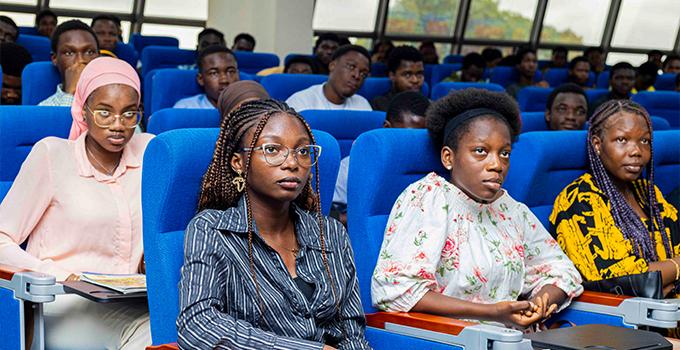
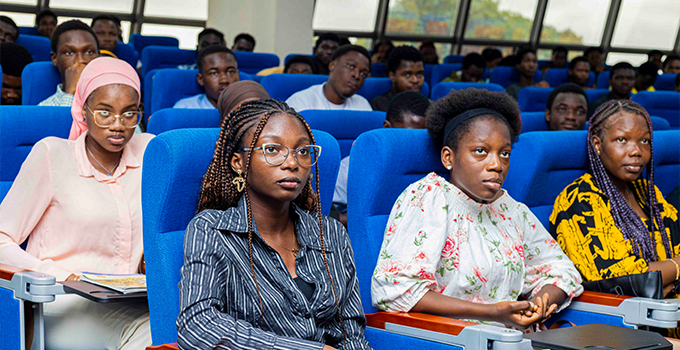
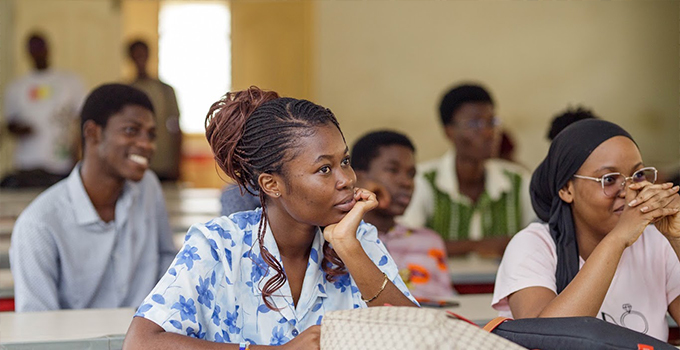
First-year students in the Department of Communication Design at Kwame Nkrumah University of Science and Technology (KNUST) participated in a course option orientation to help them make informed decisions about their academic pathways within the programme. The orientation, held on Wednesday, 12 August 2026, at Lecture Hall 3, Second Floor of the CABE New College Building, introduced students to the three major pathways available after their first-year foundational studies: creative multimedia, visual communication design, and advertising and media design. The session provided an opportunity for students to understand the different pathways and reflect on their interests, strengths, abilities, and career aspirations before selecting a major.
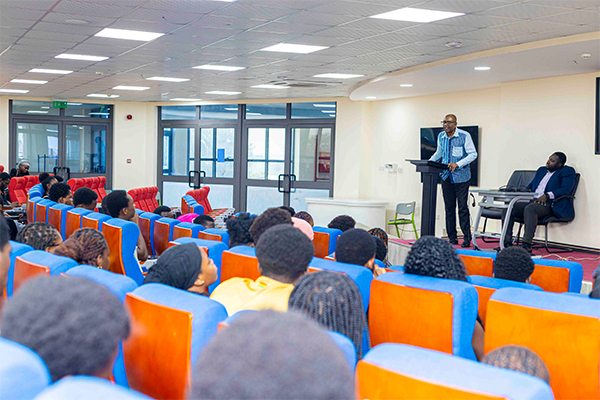 The session brought together Dr. Kofi Nyame Amoako-Agyeman, a faculty member in the Department of Communication Design, and PhD candidates Mr. Emmanuel Dankwah and Mr. Francis Amo Appiah, who shared academic, professional, and personal experiences to help the students understand the opportunities and demands associated with their choices. Also in attendance was Dr. Benjamin Prempeh, head of the Multimedia section. Following the presentations, students raised questions about the different pathways, what they entail, which software they needed to learn, and their lucrativeness, among others. The interaction created an opportunity for the speakers to address students' concerns and provide practical guidance based on their academic and professional experiences.
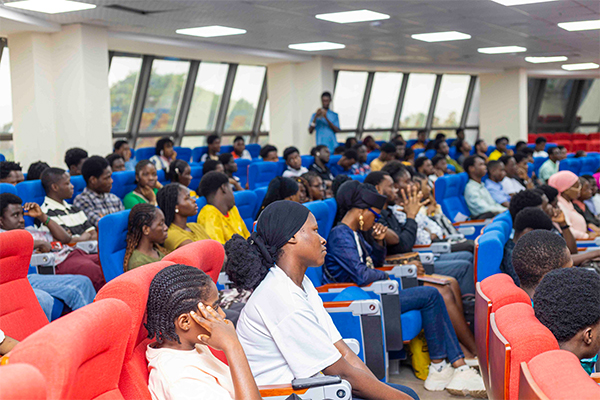 Drawing on his experience in creative multimedia, Mr. Dankwah encouraged the students to consider their interests, strengths, creative tendencies, and willingness to develop new skills when selecting a pathway. Responding to questions about equipment for film and animation, he explained that access to equipment represents only one aspect of multimedia practice and encouraged students to focus equally on developing the creative and technical competencies required to use available resources effectively. Reflecting on the opportunities within Communication Design, he noted that students are privileged to be enrolled in the programme because it equips them with practical, marketable skills, creating opportunities to undertake professional work and earn income even before completing their university education.
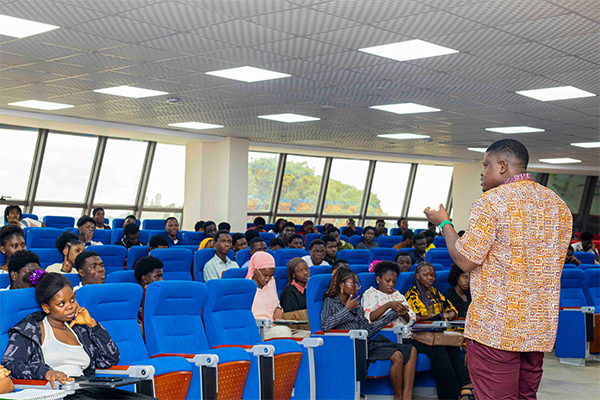 Sharing his personal journey, Mr. Dankwah recalled drawing approximately 700 individual frames for a 30-second animation walk cycle, an experience that helped him recognise that his stronger creative interest lay in filmmaking. He subsequently gravitated towards film and continued to hone his skills through practice and professional engagement. He used the experience to encourage students not to assume that they must already possess all the skills associated with their chosen pathway, stressing that practical exposure can help them discover where their abilities and interests are strongest. He also encouraged collaboration, explaining that "your strength can complement someone else's weakness, and their strength can complement yours." Similar collaborative experiences documented within Communication Design have demonstrated how ideas can become stronger when students combine and refine their contributions collectively.
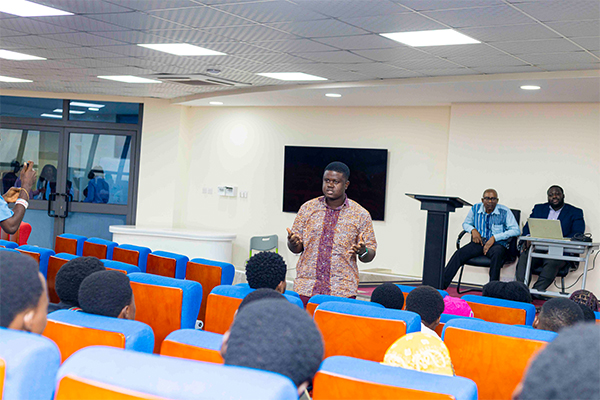 Mr. Dankwah further encouraged the students to network with colleagues beyond the Department of Communication Design, noting that relationships developed across the university could later produce collaborators, clients, referrals, and professional opportunities. He also challenged them to approach Communication Design as a problem-solving discipline and not dismiss seemingly small challenges in pursuit of only large societal problems. "Every problem, whether big or small, is still a problem worth solving," he said, adding that poorly understood attempts to address large problems can sometimes create additional interconnected or wicked problems. He therefore encouraged students to understand problems critically before developing creative interventions.
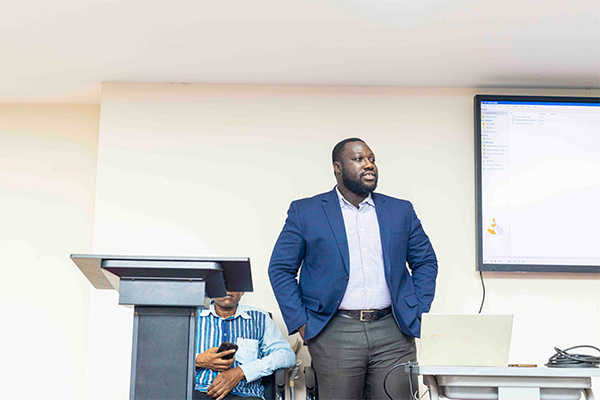 Mr. Francis Amo Appiah, a second-year PhD student and graduate research and teaching assistant in the Department of Communication Design, emphasized that none of the three course options should be considered inherently superior to the others. He explained that Creative Multimedia, Visual Communication Design, and Advertising and Media Design perform complementary roles within the broader Communication Design profession, with each offering distinct areas of specialisation and professional opportunities. "None of the three options is better than the other," he stressed, encouraging students to identify the pathway that best corresponds with their interests and aspirations.
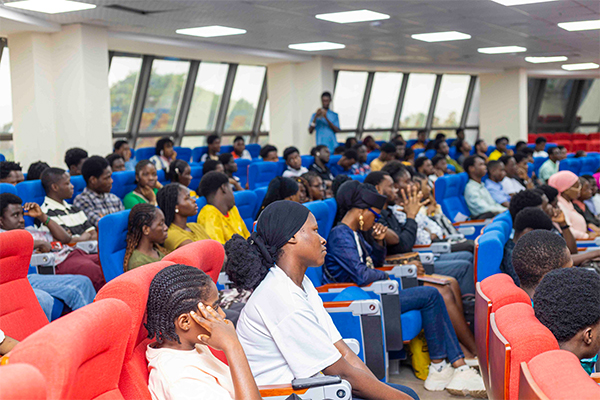 Mr. Appiah also identified passion as an important source of persistence during academic and professional development. He explained that genuine interest can sustain students when they encounter challenges and encouraged them to identify areas they are passionate about and remain committed to developing competence in those areas. He further encouraged the students to build their professional identities by deliberately communicating "what you know, what you can do and what you have accomplished." He explained that showcasing their knowledge, skills, projects and achievements can strengthen professional visibility, demonstrate value and create opportunities within the wider creative industry.
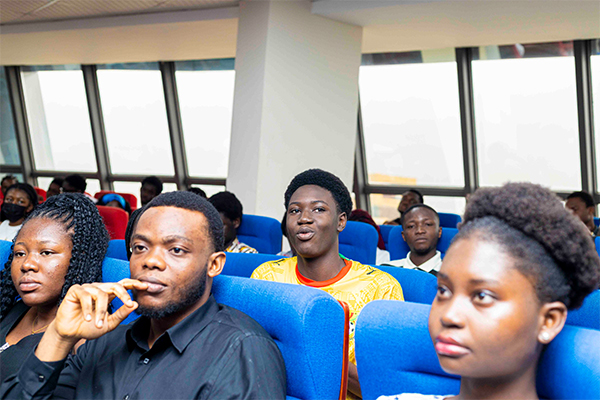 Collaboration also featured prominently in his interaction with the students. Mr. Appiah identified collaboration as one of the essential "4 Cs" of communication, stressing its importance in bringing together diverse skills and perspectives to execute communication campaigns and design projects successfully. He challenged students to move beyond classroom exercises by forming creative teams, advertising agencies and other student-led initiatives that could address communication needs within the university community. However, he cautioned them to balance such practical and entrepreneurial engagements with their academic responsibilities so that professional development complements their academic performance.
Dr. Kofi Nyame Amoako-Agyeman encouraged the students to develop healthy strategies for managing the pressures associated with university education. He explained that while too little stress can reduce motivation, excessive stress can negatively affect performance and well-being. He therefore encouraged students to seek "an optimum level of stress" that provides sufficient motivation and drive to remain focused and productive without becoming overwhelmed.
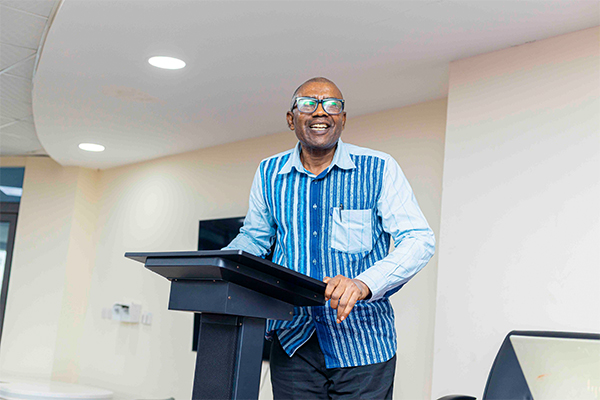 Dr. Amoako-Agyeman further encouraged the students to live and study according to principles, explaining that principles provide a framework for making sound decisions and maintaining focus when challenges arise. Among the principles he highlighted was discipline, which he described as "the bridge between goals and accomplishment." He stressed that students cannot depend solely on ambition and talent, since achieving academic and personal goals also requires consistency, commitment, and self-control.
He also encouraged the students to adopt the principle of "always keeping the end in view," explaining that a clear understanding of one's desired outcome can become a driving force for perseverance. He urged students to remain conscious of what they hope to achieve throughout their university education and not allow temporary hurdles, pressures, or distractions to derail their long-term aspirations. His contribution reinforced the importance of combining informed course selection with the discipline and personal resilience required to succeed after making that choice.
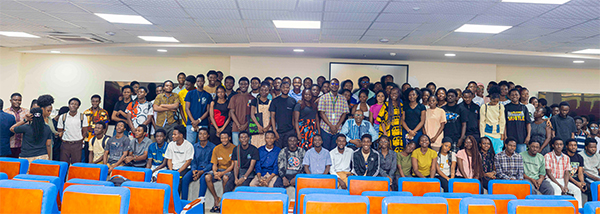
The orientation ultimately encouraged the first-year students to approach course option selection as a process of self-discovery and informed decision-making, recognising that Creative Multimedia, Visual Communication Design, and Advertising Design and Media Management offer different but complementary opportunities within Communication Design. The interactions also highlighted passion, discipline, collaboration, networking, professional visibility, problem-solving and practical engagement as important elements of students' academic and professional development. The session forms part of efforts to equip first-year Communication Design students with the information, experiences and guidance required to make informed course option choices and maximise the academic and professional opportunities available throughout their university education.
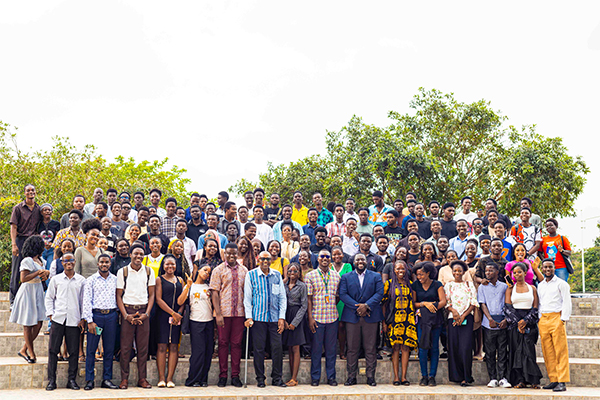
Photo credit: Mr. Robert Appau Boakye (MPhil. Communication Design)